I definitely love Madrid for the various green spaces it offers, and how in the middle of a park in the city one could almost believe they were in the middle of nowhere. The second day, we set off in the general direction of Parque del Retiro.


I definitely love Madrid for the various green spaces it offers, and how in the middle of a park in the city one could almost believe they were in the middle of nowhere. The second day, we set off in the general direction of Parque del Retiro.

When I ended up abruptly with a five day weekend, my lovely German friend who I’d met in Barcelona was kind enough to let himself be coerced into taking a trip back to Spain and to Madrid with me.

I had the most exasperating airport experience of my life in Rabat, but managed to make it to Madrid a little after my friend’s flight had arrived. Just after midnight on a Thursday night we took the metro down to our hostel, where we dumped our stuff before venturing into the streets.

Asilah means authentic, and I found this charming seaside town to live up to its name.
Each year, the town holds a festival for artists and they end up painting a mural. I loved seeing all the beautiful art across the medina, the old town, even though they replace a lot of the murals to make space for the next.


I’ve been attempting to review every book I’ve read this year since March, but I have a huge backlog since November. Nonetheless, I wanted to reflect on books that have changed my life this year. No, really. They changed my life. Don’t question me on this!

This was my first foray into Rabat, taken after a morning darija class.
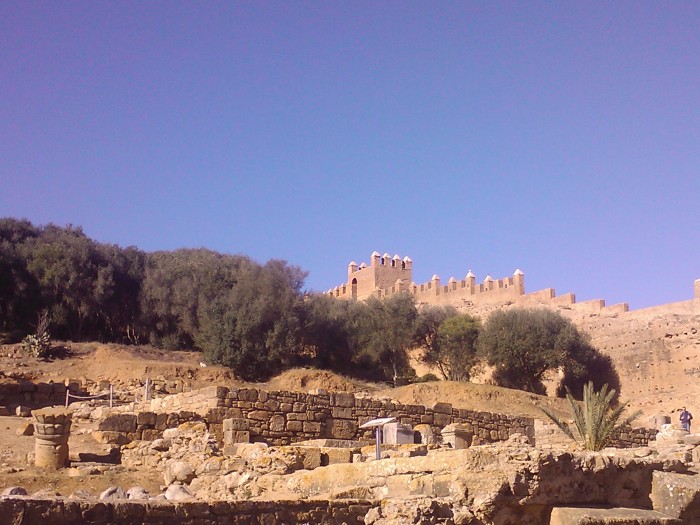
Chellah is the ruins of an old town, with a mix of architecture from Roman and Islamic times. It had been built in the pre-Islamic era, but was later used by a sultan who added a mosque and the royal tombs. Most of it was in ruins, but the various tombs were well preserved and I could see the outside of the old baths.


Next, I visited the Mausoleum of Mohammad V, the former king of Morocco. Inside, there was a place for a reader of the Qur’an who apparently reads throughout the day, and a space for the current king’s body when he dies.


After, I wandered through the medina, the old city, which was very blue and felt very authentic. Just based on the medina, I began to like Morocco more than I had the UAE.


One of my friends was kind enough to have me over for Christmas in Mersin, and she made me try all of the delicious Turkish food.
Tantuni was my favourite, and apparently a specialty of Mersin. It was similar to doner, but longer and skinnier and with ground meat and some sort of herbs that gave it a great tang.


To avoid clogging my other posts with cats, here is a post dedicated to the cats I was able to photograph in Turkey.


Though it was a series of unfortunate events that landed me in Bodrum, it ended up being my favourite place in Turkey. A quaint little seaside town, it seems like it’s packed in summer, but I still found it lovely in the winter.


You would think that travelling by bus in Turkey would be easier than in Iran, right? Yeah, I thought so too. I do get fairly cocky that because I’ve travelled in Iran, I can travel anywhere, but I almost ran into problems in Turkey.

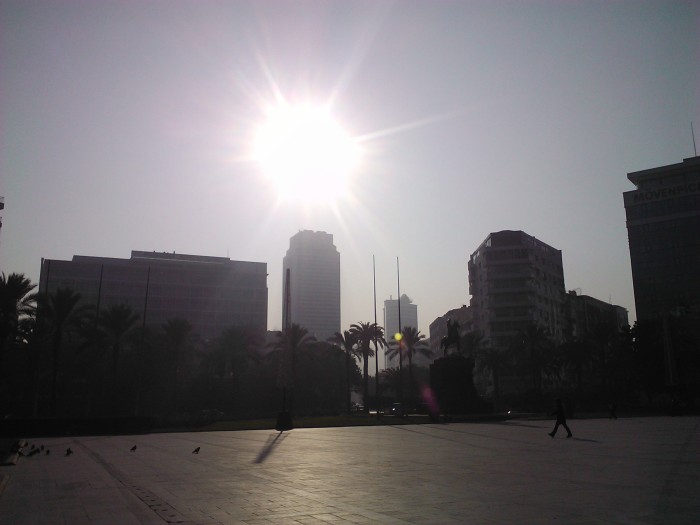
I set out wandering Izmir early, munching on a white cheese sandwich from a street vendor while walking.


The Basilica Cistern was astoundingly awesome, though kind of creepy with a lot of oversized fish swimming through its waters.


The Little Hagia Sophia was my first stop and probably the coolest. I had the entire mosque to myself and it was truly magical to be able to pad across the carpet and stare wide-eyed at every exquisite detail.

Kyiv is home to the most incredible museum I’ve ever seen: the Mykola Syadristy Microminiature Museum.
After eating an apple puff and a hot chocolate for 15 hryvnias (~$0.60), I took a bus over to the Pecherskyi District which is home to a multitude of amazing museums, churches, and caves. Though I was only expecting the Microminiature museum, I was continually surprised by the buildings I walked into.


I was flying through Kyiv on my way to Turkey, and for an extra $20, had a 36 hour layover which gave me some time to explore Ukraine’s gorgeous capital.
I must admit that I had rather low expectations for the city, but was pleasantly surprised by the architecture and the feel of the old streets. With the temperature below 0 both days, I was amused by the fashionable coats and heeled boots a lot of women wore.
I left my suitcase at the airport’s Left Luggage and set out on a shuttle bus. On this bus, I met one of the few people who spoke English–he was a sweetheart and helped me figure out which way to take the subway.
When I emerged from the subway in Independence Square, it was to this:


This, in a way, is a continuation of my October post on disillusionment.
This is weird.
I’m awful at saying goodbye. Horrible. Attrocious.
I can tell you off the top of my head the day I held my farewell party from New Zealand. I cried for about 48 hours straight when I left Yellowstone the first time. I told only three people that I was leaving when I left Yellowstone the second time to avoid goodbyes. I get melodramatic and sentimental with the end of every regular semester in Maryland.
But I have absolutely no sentimentality about leaving Dubai. Deuces, Dubai. It’s been fun, but I won’t miss you.
Dubai isn’t in any sense a home to me. As I said earlier, Dubai is very transient and very Western. Very capitalistic, very artificial.
I am definitely glad I came here. I am forever grateful to the Clinton Foundation, and I encourage any US college students to apply for the Clinton Scholarship that funded this semester for me. Words cannot express how incredibly grateful I am.
But that doesn’t mean I loved it.
I’ve been blogging more about experiences and various trips than about the general feel of things because I’ve been living in university dorms, attending classes, and working on my internship just as I would had I been in Maryland. Life really hasn’t been that different. There’s been very little culture shock because my culture hasn’t changed very much.
My favourite thing about Dubai is the variety of people one will meet. Only around 15% of the population is Emirati, which means that there are a lot of people who have been born and raised in the UAE but celebrate another culture just as fully. I love that I’ve studied alongside many Egyptians and Sudanese, that I have friends from Lebanon and Nigeria, that I know people from Bahrain and Saudi Arabia. I am all about celebrating multiple perspectives and the various stories people have.
However, I have found at my school there is a lot of privilege. There are a lot of people who are very entitled. Some are just taking classes in order to stay with their families as the school sponsors their visa. Some are just taking classes to kill time before they take over their family’s companies. Some are here because their parents are paying and they have nothing better to do.
The educational environment was very different to what I’m accustomed to, and I think this was the hardest part for me–this was my culture shock. The students moaned about ten page papers in a 300 level class. In one of my classes, I was the only person who didn’t cheat on the midterm. Three of my teachers were always late to class–one never showed up less than ten minutes after class had started. As someone on scholarship paying for a good chunk of her college education, I can do the math quite quickly to tell you that, were I paying full fees here, she would have wasted approximately $810 of my money on time she wasn’t in class.
I don’t know. Maybe I’m being elitist myself. But I learned how to write ten page papers in freshman year of high school.
I’m disappointed in myself because I told myself I wouldn’t hang out with the other exchange students, but my best friends here are definitely those coming from European universities. I have a couple of good friends who are full time students, but I definitely could have tried harder.
My biggest irk with the elitism here though is how the upper class–students included–treat the lower class. It’s absolutely atrocious and disgusting. At the malls, they leave messes everywhere because cleaners will come. In the dorms, if they drop a piece of trash, they don’t bother to pick it up. After practice, the soccer field is littered with empty plastic bottles. I’ve overheard girls in the dorms screaming at the cleaners who come every week to wipe up their messes. These cleaners work twelve hour days, six days a week, and most people spare them absolutely no thought. I asked a fulltime student what he thought, and his response was that they give the cleaners leftover food from events, and that makes it all okay. I hear horror stories about how many poorer immigrant workers live behind signs on the highway or ten to a room in an overpriced apartment. Maybe I’m more of a socialist than I thought, but when the government can afford to pay for sleeve surgery for any obese citizen and can build massive architectural structures with little purpose, they can afford to at least create some low-income housing.
People just have different mannerisms and aren’t as conscious of other people–whether it’s on the metro, when everyone tries to get on without letting people out, or whether it’s standing in the center of a moving walkway so no one can go around. This is, to me, particularly true of the Western tourists too. I feel like there’s a class divide here, not a cultural divide.
I was raised in New Zealand, where everyone’s pretty darn blunt. I’m half-Dutch, and we’re known for being pretty darn blunt. But where I was raised, everyone was equal. And we said ‘please’ and ‘thank you.’
I was also raised in San Francisco where we’re known to be pretty crazy tree-huggers, but the lack of environmental consciousness in the UAE is truly concerning. I hope it changes soon, because it doesn’t matter if half the world works towards sustainability if people are still over here throwing everything in the rubbish. This is true of many countries outside of the US.
There’s too much unnecessary extravagance in the UAE for me. I’m more of a utilitarian, so I’m not very impressed by the Burj Khalifa or the Burj al Arab. (Saudi Arabia’s apparently working on a building taller than the Burj Khalifa–seems to me like a competition to see who has the biggest…building.) I don’t understand the point of an $18,000 a night hotel suite. I’d rather have my $10 hostels that allow people from all backgrounds to explore.
I’d rather see Old Dubai and the restored huts there that show what life might have been like many years ago. But walking around the souq, I’ll encounter many people who simply want to sell me ‘designer’ handbags and no locals who can tell me about their country. Coming back from Iran made me like at Dubai with different eyes, and from my perspective, they’re trying too hard to erase what had given them culture.
I’m also disappointed in my lack of Arabic proficiency. I may have passed Arabic 101 (barely) but I can barely introduce myself. I can tell my roommate she is a chicken, and I can call a camel beautiful. I cannot, however, communicate with any semblance of sense. I feel like I got very little out of the time I put in. Part of this is because everyone speaks English in Dubai–I think more people speak English than Arabic.
There are some things I’ll miss about Dubai. I’ll miss the security guards outside the dorms who always smile. I’ll miss being a $100 flight from Iran. I’ll miss the swimming pool. I’ll miss the ready availability of pomegranates.
But I don’t think a bone in me is sad to be saying goodbye, and I don’t think there’s anything I’ll miss enough to want to return.


These photos didn’t fit elsewhere.


My friend and I decided to brave inter-Emirate UAE public transit and to head to Abu Dhabi to see Sheik Zayed Grand Mosque. Though in total it took us about three hours between the metro and two buses to get there and another three hours to get back, we felt very accomplished at not getting lost.
The mosque was absolutely stunning, and well worth the journey. We arrived late afternoon and stayed through the sunset, meaning that we got to see the colours change and the shadows grow. It was one of those perfect nights with the silhouette of the moon entirely visible behind its silver crescent and, to my delight, a few stars.
We took a tour, and I learned a few fun facts. The ground the mosque had been built on was elevated 9 meters in order to make the mosque more visible from afar. The minarets are 170m tall. The marble in the courtyard doesn’t absorb heat, so in the summer one can still walk barefoot across comfortably. In the entry hall, there are flower decals representing all regions of the world–the flowers on the south wall are of the south, etc. The chandeliers weighed up to 12 tons a piece, and the carpet inside is the largest Persian carpet in existence today and had weighed 40 tons initially. The designers intended for the mosque to be a place for the international community; as such, many parts from marble and jewels to gold and designs had been imported from all over. There was a lot of mother-of-pearl/paua from New Zealand.
While it was gorgeous, I couldn’t help but compare it to the Mausoleum of Shah-e Cheragh, a mosque in Shiraz, Iran. I’d like to see the Grand Mosque on a Friday when it’s filled with people praying. Since it was chock-full with tourists, it again felt like another display of the UAE’s wealth to the world. I did appreciate our tour guide talking about how the mosque is very important in educating foreigners about Islam and how Muslims practice their religion, and the mosque, visible from the three main roads into Abu Dhabi, is definitely a distinguishing and welcoming site.


They should hire me as a recruiter for the parks, as my sixth friend just submitted an application. I feel like I’m perpetually telling people to go work in national parks, so I figured I’d create a post on the topic to save myself from repeating the same information multiple times.
Whether you’re looking for a fun way to make some extra cash over summer, whether you want to have a working vacation after graduation, or whether you’re looking for a long-term post where you’ll be happy, working at a national park can be one of the most rewarding experiences.
I’ve worked two summers in Yellowstone and one summer in Zion for Xanterra Parks and Resorts, and have friends working in other parks.
Note: This post applies to working for concessionaires, not to being a park ranger!

The longer, the better. If you can commit to at least three months, you’ve got a really good chance of being hired. The dates you put on your application, however, will most likely be the dates you are contracted to work.
But be realistic. If you finish up with school or another job on May 15, don’t say you can work May 16. You’ll want to leave at least a day for travelling, and you might want to consider if you’ll need a break.
Likewise, be realistic with your end dates. There’s nothing to stop you from quitting or leaving the park early–if you give at least two weeks notice, you’ll leave with a favourable report and can still be rehired. However, most parks offer a bonus upon completion of your contract, some per day and some per hour. For example, Yellowstone offers a bonus of $3 per day of your contract, which can be a nice $250 bonus on completion of a three month contract.
Typically, the parks need a lot of help at the end of summer when students return to college or people quit. If you want to get a foot in the door, go up for a month in late August/September.
If you apply early, have long dates, and are willing to accept an entry-level position, I’ll eat my hat if you don’t get a job.

Think about your skills and experience. Do you like working with people? Do you like being busy? Have you studied anything related to the hospitality industry?
If you have serving experience, I really recommend applying to be a server in F&B. They have by far one of the most stressful positions, but they make more money than most other positions thanks to tips. If you want to go to a bigger park, you could also apply to be a server assistant, which is an entry level position. However, in smaller parks like Zion, these are very coveted positions and much harder to get.
I’ve kind of engrained myself in Retail now, and for the most part, I enjoy it because it involves a lot of interacting with people, and I do enjoy that for the most part. My best work days are always the ones on which I get to talk to a guest about which hikes they should attempt, and it’s a really rewarding feeling to have someone come back and tell me they enjoyed their experience. However, I’m equally an extrovert and introvert, and I often found that after work I had to go and hide from everyone because it took a lot out of me. Handling a cash register and a bank comes naturally for me, but for some people, it was very stressful.
Other cushy departments include Front Desk (less exciting than retail, but still involves a lot of guest interaction), Maintenance (if you can work a wrench), Accounting (if you have the background), and HR/Recreation.
Housekeeping is a safe department to go for that’s entry-level. The work is rather menial, generally involving cleaning rooms and cabins, but if you’re there long enough, there are opportunities to become an inspector and move up. It’s not typically very stressful, and the department/areas within the department tend to get pretty close with those they work with. In the nicer hotels and occasionally in the cabins, you’ll also find tips.
F&B (food and beverage) is normally one of the biggest departments and thus gives you some flexibility if you don’t like your job to try and switch areas. I worked as a dishwasher for three weeks, and I loved it. It took a little getting used to–I was coming from working for a lawyer and a museum, pretty kushy jobs–but once I befriended my coworkers, we had so much fun yelling over the machines and singing (and annoying the line cooks!) After that, I worked in the employee dining room, and I hated it. Had I been there another two weeks or so, however, I would have received a server assistant position, so.
But honestly, don’t sweat the job. If you’re going up for the job, you’re going up for the wrong reasons–or you need to add reasons to be going! Be excited about the park. If you’re working with guests, having enthusiasm about your surroundings and knowledge about the area will improve their experience, and thus, yours.

A big thing to take into consideration is the type of environment you want to be around. I had very different experiences working in Canyon Lodge in Yellowstone and in Zion because of the size. A quick search will tell you the size of the park–Zion is 593km2 and Yellowstone is 8,983km2. You can understand why I ran out of hikes in Zion in less than a fortnight, while I still haven’t explored half of Yellowstone.
As such, Zion was a much more intimate experience. Since it’s also open year-round, there are a lot of employees who are there fulltime and less college-age students. I was kind of stuck with the people (love you guys!)
Also, depending on how social you are naturally, take into consideration if the park has a transit system or if you’re bringing a car. If you have a car, you will be everyone’s best friend! My first summer in Yellowstone, I was very shy and as such I didn’t get to explore much until I opened up. In Zion, the first week I was very antisocial, decompressing from an emotional semester, but since there’s a shuttle in Zion, I was able to get out a lot.
Be aware that some parks have various locations within them. Working at Roosevelt Lodge (with about 50 employees) in Yellowstone is much different from working at Old Faithful (with two separate locations equating to around 800 employees) will elicit two very different experiences. If you’re allergic to horses, don’t work at Rosey!
Another thing to think about is the weather and the terrain. If you hate hot weather and you hate climbing up and down hills like I do, you should not work in Zion. (What was I thinking? I do not know.) It doesn’t get much hotter than 20 degrees in summer in Glacier, so if you want a nice tan, you should not go there.
But screw formulaity. I recommend just google imaging the parks and picking whichever looks prettiest to you. I went to Zion because friends had posted photos and I was sooo envious, so I decided to do it myself.

This does depend on park and company. Most Xanterra properties operate with dorms and Employee Dining Rooms (EDRs.) However, some parks don’t have a set meal plan and give you more freedom–Yosemite, for example, has no EDR, but has employee kitchens and gives employees 50% off all menu items. The food in the EDR sucks. Deal with it. Most of them have salad or sandwich bars open all day, so you can always make a bagel or eat cereal. (Zion had ice cream. That was dangerous.)
Most parks allow you to bring your RV, so if you’re retired and looking for an adventure, that’s an easy way of keeping some privacy and having a mini-home. This is also generally the only way you can have pets in the parks.
For most people, however, dorm living is the life. Expect a roommate–or two, if you’re in Zion, where tourism is growing exponentially yet the NPS won’t allow for construction of new dorms! This isn’t college, however. In Yellowstone, I roomed with my male best friend platonically, and I couldn’t have picked a better roommate. No one cares who you live with or if you’re married. You can switch rooms as long as there’s a space. If you want to have a guest tent in your room, well, that’s your prerogative. If you plan on leaving a pad of post-it notes and a pen on your door, however, be aware that NPS may be concerned if your friends leave you ‘abusive’ messages.

Probably not much. But a little. If you’re looking to save a lot of money, this isn’t the place. However, if you’re okay with only putting away a little bit of money, this is a good place. $100 per week is a good estimate for what will be deducted from your pay cheque for room, board, and medical insurance. On average, I made $5.50 per hour in Yellowstone. (I’d made $11.55 in San Francisco before my first summer…it still hurts!)
While the pay is meagre, there are few opportunities to spend your money. It’s easy to avoid temptation, and if you’re careful, you’ll find you save most of your paycheque.
Overtime isn’t common–most departments will go above and beyond to ensure that you don’t hit that mark. Check what the laws are for the state in which the park you’re applying for are–in Wyoming and Utah, overtime begins at 48 hours. As such, I was able to pick up a lot of extra hours that put me at 47.5 hours per week, but only one time in my three summers was I given permission to enter overtime.

It doesn’t matter how old you are! I work at my college’s alumni outreach center, and I’ve told at least three retired couples that they should consider working in a park. (I hope my boss isn’t reading this!) While it’s true that with seasonal work a lot of people are young and fit, I found in Yellowstone that there were quite a few retired people, couples and singles. I went hiking with these lovely people and though I did have to slow down, each experience was lovely and I enjoyed their perspectives on life. I was the youngest employee in Canyon my first summer, barely eighteen, but I had friends across the board. As long as you’re open to meeting people and willing, it doesn’t matter how old you are.

In Zion, I closed all summer as I was lead, so I’m going to use Yellowstone ’14 as an example.
My “weekend” was Friday and Saturday. As such, on Sundays, I generally worked close 14:00-22:30. I’d get up early and go on a hike first thing, making it back in time for lunch and a bit of time to relax before work. Some Mondays I’d close and some Wednesdays I’d open, but normally from Monday to Wednesday I had midshifts, ranging from 10:00 to 12:30 start times. I’d sometimes hike before or after work, but generally used this time to relax and hang out in the dorms with friends. I often went on night hikes to the canyon, a twenty minute hike away. Occasionally I went to watch the sunrise, making it back in time for breakfast and a nap before work. On Thursdays, I opened, working from 07:00-15:00, but normally I could beg off by 14:00. Sometimes, I’d go away with friends camping or to stay in Grand Teton National Park, always making it back in time to close on Sunday! If I requested time off in advance, I could get a three day weekend, or make a plan to go hiking with a friend who had different days off. My coworkers were lovely and we often switched shifts to cover each other.

If you’re a student, the J-1 visa is what you’re looking for. If you’re willing to come out with net zero because you spent your entire paycheque on travelling, you can totally apply. I’m not super familiar with the process, but you do generally need to attend a job fair through your school or in your local country and they screen international applicants with more scrutiny than domestic applicants. Don’t let the paperwork discourage you: get in early and apply. I’ve worked with the coolest people from all over the world: Taiwan, Poland, Slovakia, Czech, Ecuador…

(Because internet searches are too hard for some people… <3)
Xanterra job opportunities can be found here. I have a lot of issues with Xanterra’s executive branch and I think they’re an evil corporation; however, they’ve given me the best summers of my life, so I suppose I have a begrudging respect. I’ve also heard that other companies aren’t as fun to work for. They operate in Crater Lake, Death Valley, Glacier, Grand Canyon South Rim, Mount Rushmore, Rocky Mountain, Yellowstone, and Zion. For other parks, do a quick internet search!
Applications for summer can open as early as the previous October, but generally, the bigger parks don’t send notifications until January. Certain departments that require interviews will call in November. I applied in March my first summer and had no problems getting an entry level position.

Just do it.
Honestly, I think that most people who are going straight from high school to college should be required to work for a summer in a national park first! There’s a reason why my friends roll my eyes when I mention Yellowstone again and there’s a reason some of my closest friends are those I met in Canyon. There’s a reason that Canyon Village is the place I consider home.
If you like the outdoors, to hike, or to adventure, you’ll find many like minded people in the parks. People who care about our world, people who aren’t materialistic, and people who are chill. People who have no plans of ever going to college and who are content to live. Yellowstone ’13 was the first time in over two years I hadn’t felt stressed, and every time I feel down, I find myself wishing I was back in another park where life is more simple.
This is by far the best way to explore every nook and cranny of a park, and believe me, there will always be new places to find. Seeing a park in early May when it’s still devoid of guests, in June as the sun invites wild animals out, in July when it snows randomly at midnight over the canyon, and during thunder storms in August is magical.

Got more questions? Shoot me a message and I’ll see if I can help!

Ever since I heard about the Dubai Miracle Garden, I’d been dying to go. In typical polychronic fashion, however, their website had said that the gardens were “temporarily closed for the summer season” with no indication of when they’d open as late as the second of December. I’d been checking back though, and was thrilled to find that they’d finally opened–and with no time to spare!
This was by far my favourite of all of Dubai’s attractions. It was a gorgeous day and wondering around felt like walking into Alice’s Wonderland mixed with Disneyland. Though it was a little off the main route and we had to take a taxi, I highly recommend this to anyone coming to Dubai.


I really don’t like it when people say that they’re jealous of me going cool places or they admire my initiative. Why? It makes me feel guilty.
If one tells me that they are jealous of me, then I promptly feel bad that they, unlike me, are not able to have this experience. However, in some cases, they are capable, but lack the motivation.
Getting myself a job in a national park took an application about five minutes long. Getting a scholarship to Dubai might have been a lot of work as they took my resume, an essay, and a letter of rec; however, that was work anyone could do–I knew about two words of Arabic before I came. I was nothing special. Going to Morocco next semester (which will cost nearly as much as my three years in Maryland combined) is a lot of middle class privilege–thanks to my parents, I’ve been able to work to save up a lot of money, and even though I’ve worked hard at jobs throughout high school and college, I’m pretty darn lucky to be able to put that money straight to savings instead of to feeding myself. I’m pretty darn lucky that I lived in San Francisco and was able to have cool extracurricular opportunities and to attend one of the best high schools in the country that led to my having a massive scholarship to my home institution.
No one is trying to make me feel guilty. These people are genuine friends who are excited for me. I don’t hold it against them or treat them any differently. So why does it still bother me?
When I suggest to these people who consider themselves envious that they, too, could apply for a job in a national park or spend a semester abroad, there are a myriad of excuses–“I don’t have the time,” “I couldn’t leave home for a summer,” “I would miss this city too much,” “”I want to see my friends over summer,” “I couldn’t handle the language barrier,” “I wouldn’t want to work cleaning dishes”–that boil down to comfort zones. There are some very valid ones, too, namely financial situations and engineering programs. But I’ve been thinking about comfort zones recently.
There’s that old Pink Floyd song, “Time,” that was a huge influence on me when I was writing a story a while back. There’s a line that summarizes a few of my fears of life: “And then one day you find ten years have got behind you–no one told you when to run; you missed the starting gun.”
If not now, when? Some other time? That doesn’t cut it for me.
My comfort zone is in not being in a typical comfort zone. My comfort zone is in continuously moving and not allowing myself to get attached. It’s a way of putting up walls for me. If I get too invested, I might be forced to leave. I feel stressed when I’ve completed my to-do list. I constantly fear living with regrets. I’ve been raised in a monochromatic environment–from middle school, I was engrained with the “get good grades to get into a good high school; high school is the golden years, but get good grades to get into a good college; make the most of the carefree college years, but get good grades to get a good job; get a good job to make enough money; make enough money and maybe one day you’ll be happy” mentality. I’d lived in three countries by the time I was twelve. For me, there is no comfort in consistency.
My life sometimes feels like a huge fear of missing out. I often push myself to go out and ‘have fun’ when in reality I’d be much happier curled up in bed with a book.
So don’t admire me. I’m just as caught in the throes of my personality as those of my friends who never contemplated leaving suburbia. I admire those who are happy with what they have and content to just be able to live, and I hope one day I’ll achieve that amount of relaxation.
“Few places in the world are more dangerous than home. Fear not, therefore, to try the mountain passes. They will kill care, save you from deadly apathy, and call forth every faculty into vigorous, enthusiastic action.” – John Muir

Though all of the items in the Medinat Jumeirah Souq are double the price of those in the textile or gold souqs, the area is extremely pretty and home to a variety of upscale restaurants. Here, we found a pub to watch the Rugby World Cup final, and here, we had a dinner to celebrate the end of the semester. Additionally, it provides an excellent view of the Burj al Arab.


